
Vaccine Scheduler
At the end of 2020, discussions about the COVID-19 vaccine availability were taking center stage. Pharmacies like Rite Aid, began partnering with health organizations to help bring the vaccine to people in the United States. At Rite Aid, we designed an end-to-end scheduler experience, giving users access to book vaccination appointments.
Rite Aid | Lead UX/UI Design, User Research | 2020
The Problem
Users need a way to access the COVID-19 vaccine.
When the long-awaited vaccine was announced during the COVID-19 pandemic, there needed to be a way for everyone who wanted a vaccine in the United States to get one. At the time, Rite Aid did not have a digital solution for users to schedule any type of appointment. There was massive interest in people immediately wanting the vaccine, but there was also a vast amount of misinformation, causing many to be skeptical.
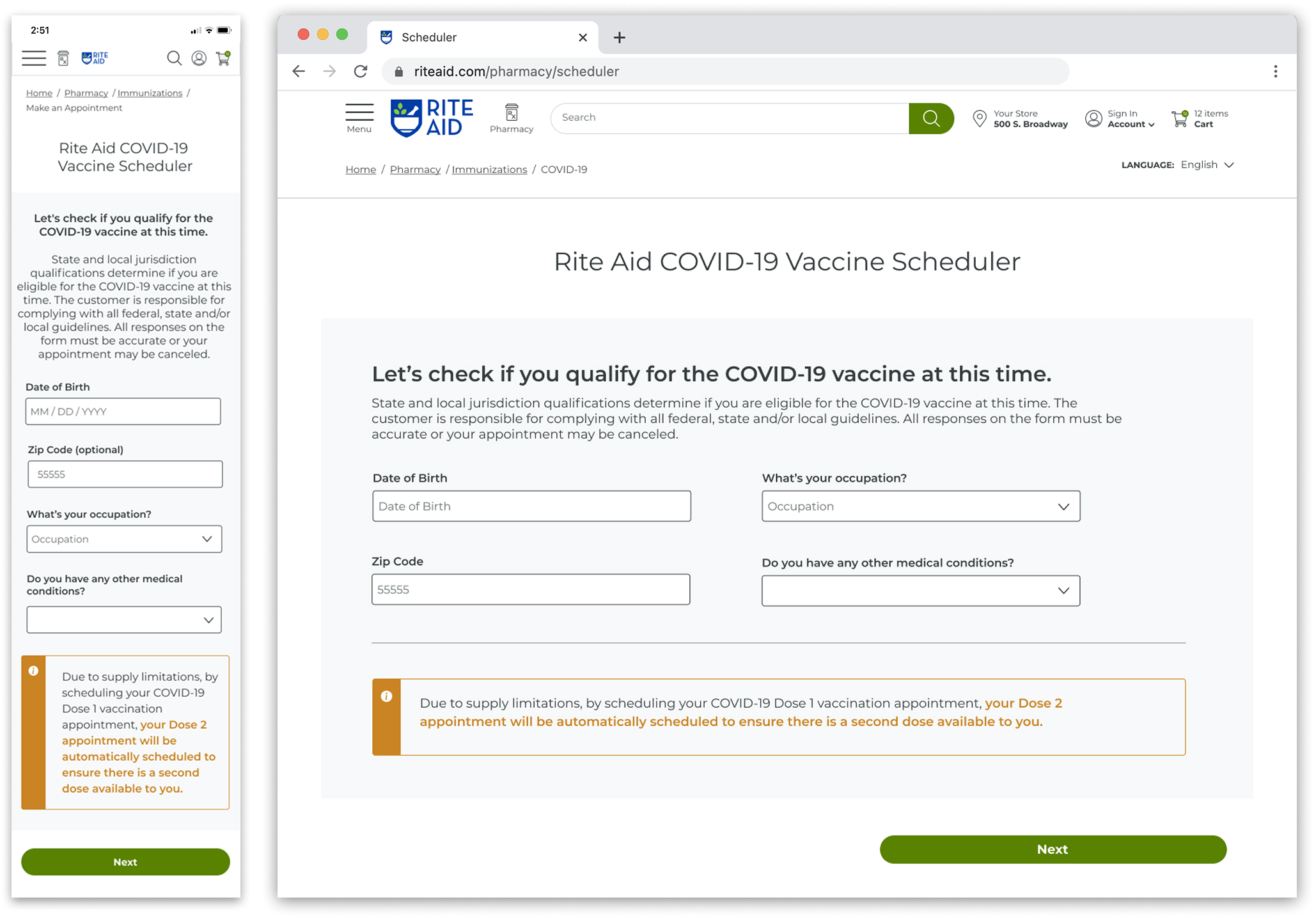
MVP DESIGN 2020
Research Methods: User interviews | User persona | Prototype testing Customer journey | Market and competitive analysis
Research & MVP
The industry was starting from scratch on how to navigate a global pandemic. There was a lot to learn about the quickly changing user behaviors and very little time to gather it. With very tight deadlines set by the market and the CDC, we released an MVP version of a COVID-19 appointment scheduler experience. In parallel, we worked with a team of researchers to speak with users about how they were navigating all of the changes happening in the world. Speaking to individual users and watching them interact with the scheduler, helped us inform our future state designs and make sure that we incorporated their needs as we continued to iterate.
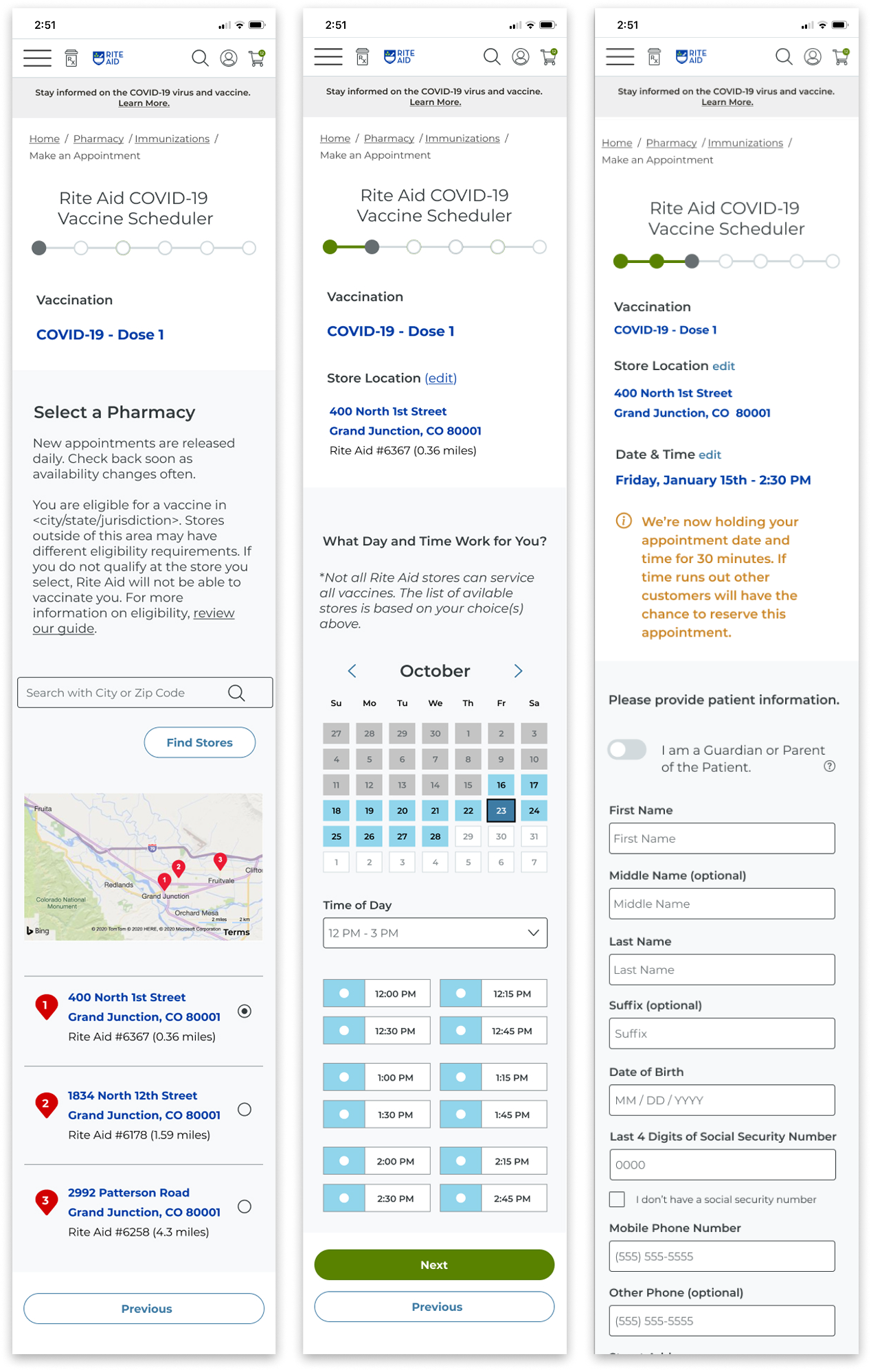
MVP DESIGN 2020
Overall
The industry was starting from scratch on how to navigate a global pandemic. There was a lot to learn about the quickly changing user behaviors and very little time to gather it. With very tight deadlines set by the market and the CDC, we released an MVP version of a COVID-19 appointment scheduler experience. In parallel, we worked with a team of researchers to speak with users about how they were navigating all of the changes happening in the world. Speaking to individual users and watching them interact with the scheduler, helped us inform our future state designs and make sure that we incorporated their needs as we continued to iterate.
Goals:
Make vaccine appointments accessible to everyone
Empower and inform users with accurate vaccine information
Stay agile in a rapidly evolving environment + plan for longevity
Success Metrics:
Increase unique visits to Riteaid.com
Scheduled appointment completions and conversions
Lower rate of cancellations and no-shows
Target User:
Short-term: Users with predetermined health conditions
Long-term: Everyone
Constraint Overview:
Time constraints
Health regulations
CDC requirements
Gov. administration change
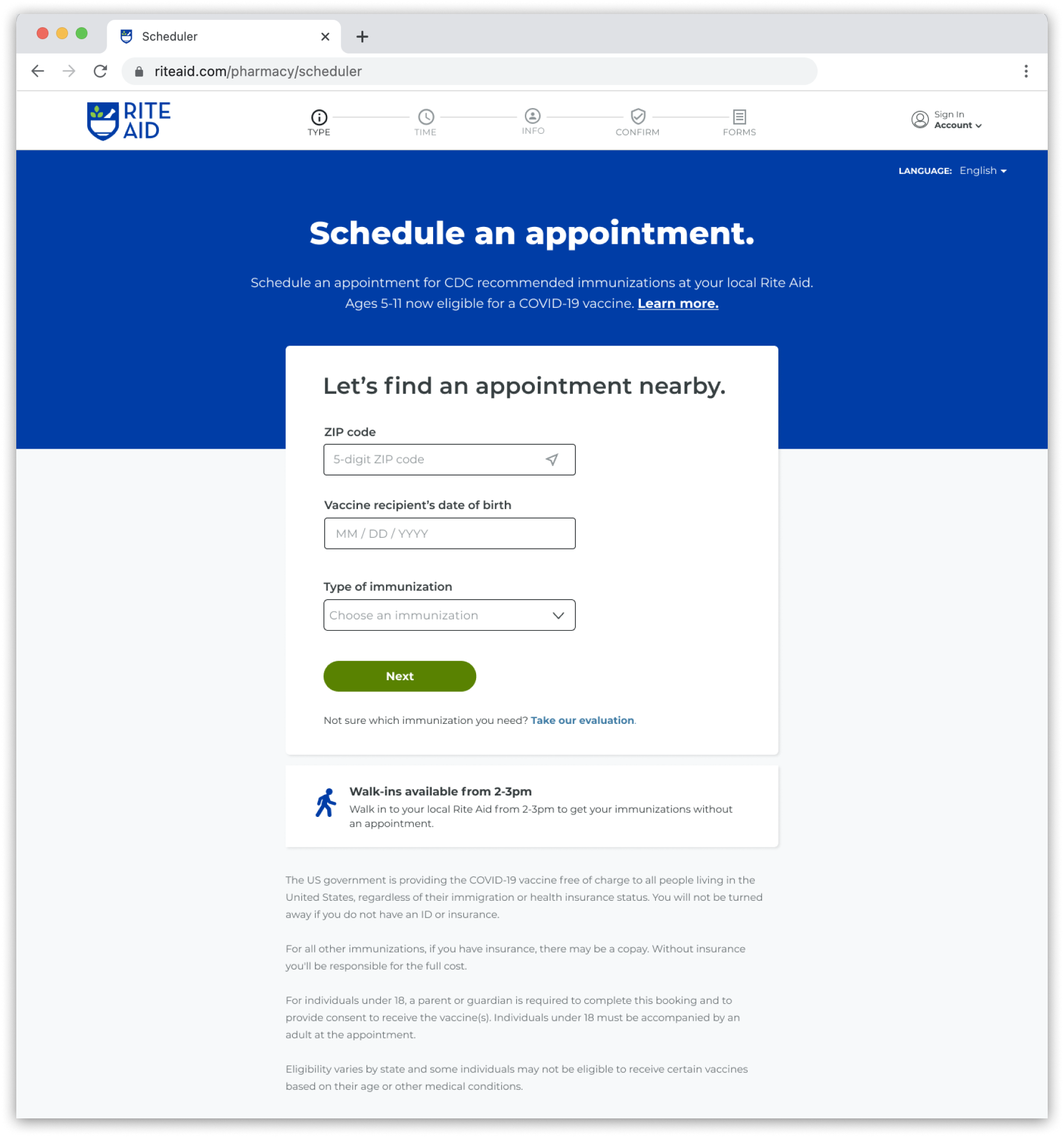
REFRESHED DESIGN 2021
Journey to a healthier experience
When we were able to catch our breathe after the initial MVP launch, we had a long list of improvements we wanted to invest in:
Set up a better foundation to accommodate the full suite of vaccines that Rite Aid offered (supporting conditional intake questions)
Maturing the UI and content to improve the user experience
Extend accessibility to everyone (Spanish translation, walk-in messaging, ADA compliance)
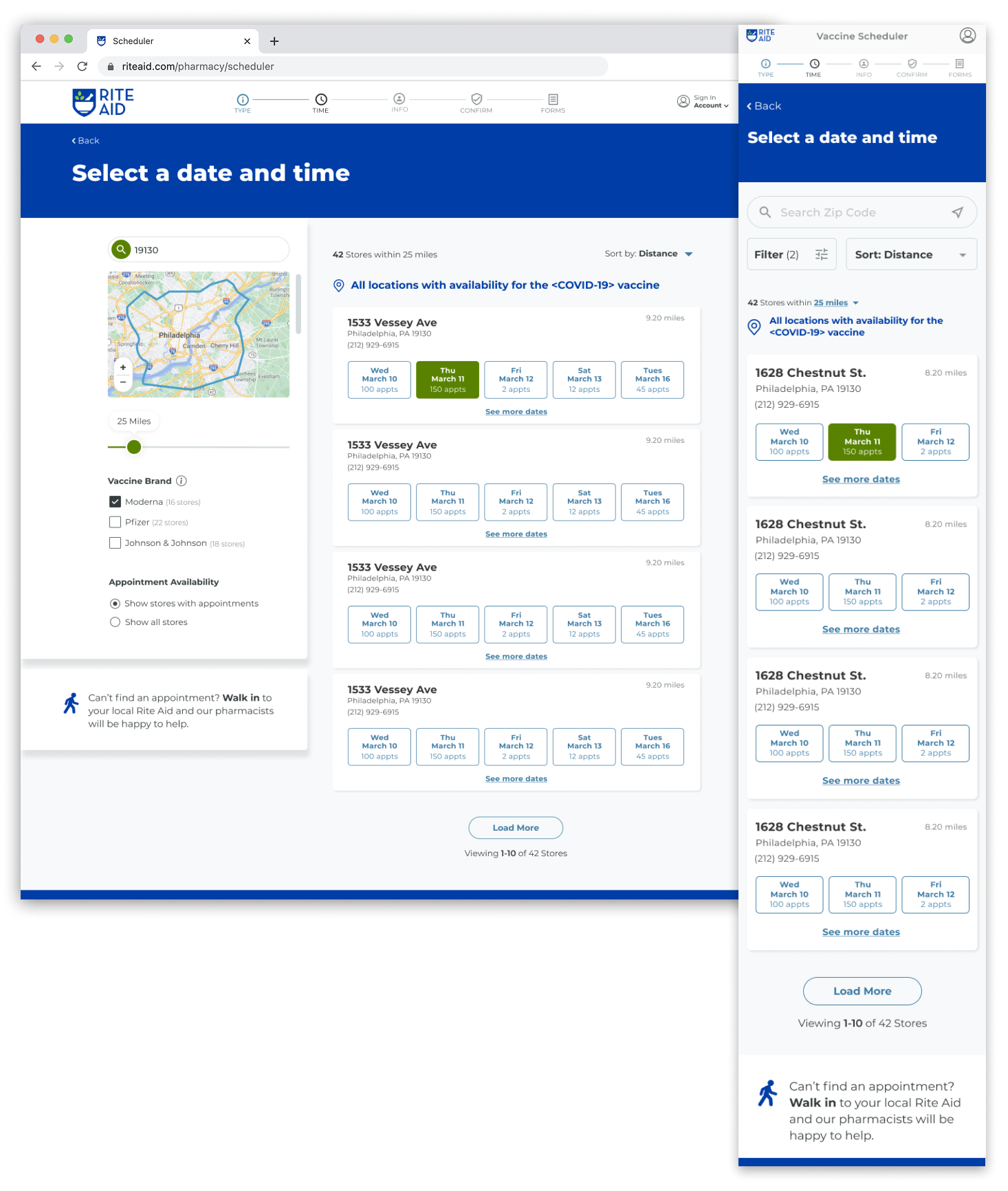
As new COVID-19 vaccine brands and strains became available it was important to users to have control over which brands they got. This would required UX architectural re-structuring and backend changes to support it.
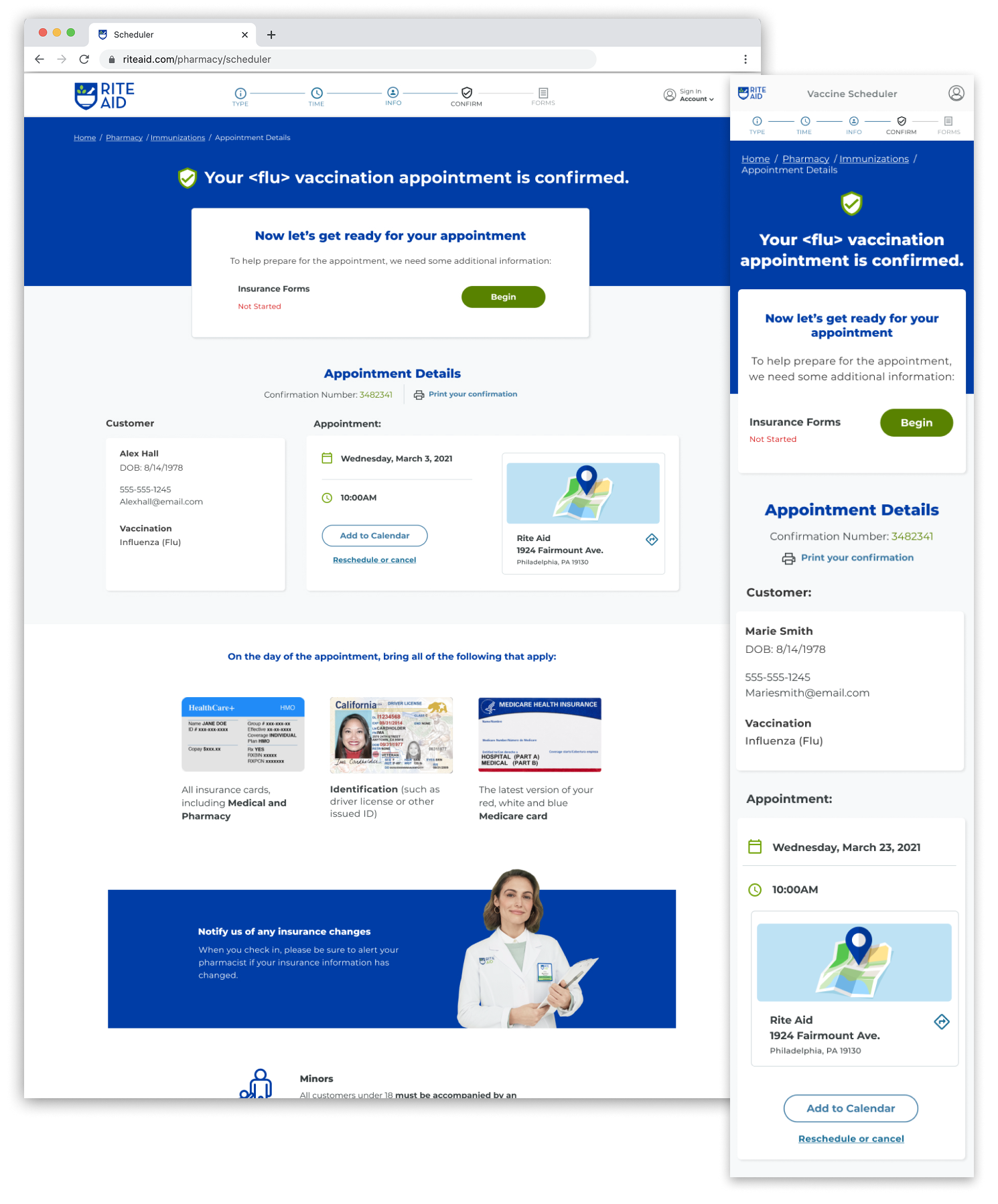
The appointment counts were so high that we needed to cut down time spent with the Pharmacists. So we wanted to create a post-booking experience to alleviate strain during the appointments by prompting users to fill out paperwork prior to appointments.
We improved the steppers, adding icons and text for clearer contextual indication clues. We wanted to instill confidence and reassurance in users by letting them know how long the experience would take and insight into what they would need to complete.
Demand far exceeded available appointments and vaccine inventory and pharmacists were overwhelmed with intake. There was also an influx of no-shows, cancellations, and constant last-minute changes for vaccine requirements, so we worked with stakeholder teams to:
Reduce calendar availability from 6 weeks to eventually 1 week out to cut down no-shows, cancellations and allow for easy adaptability on the development side
Worked with our pharmacists to optimize time-slots based on current workflows. Even calculating the optimal number of appointments per vaccine vial to minimize waste
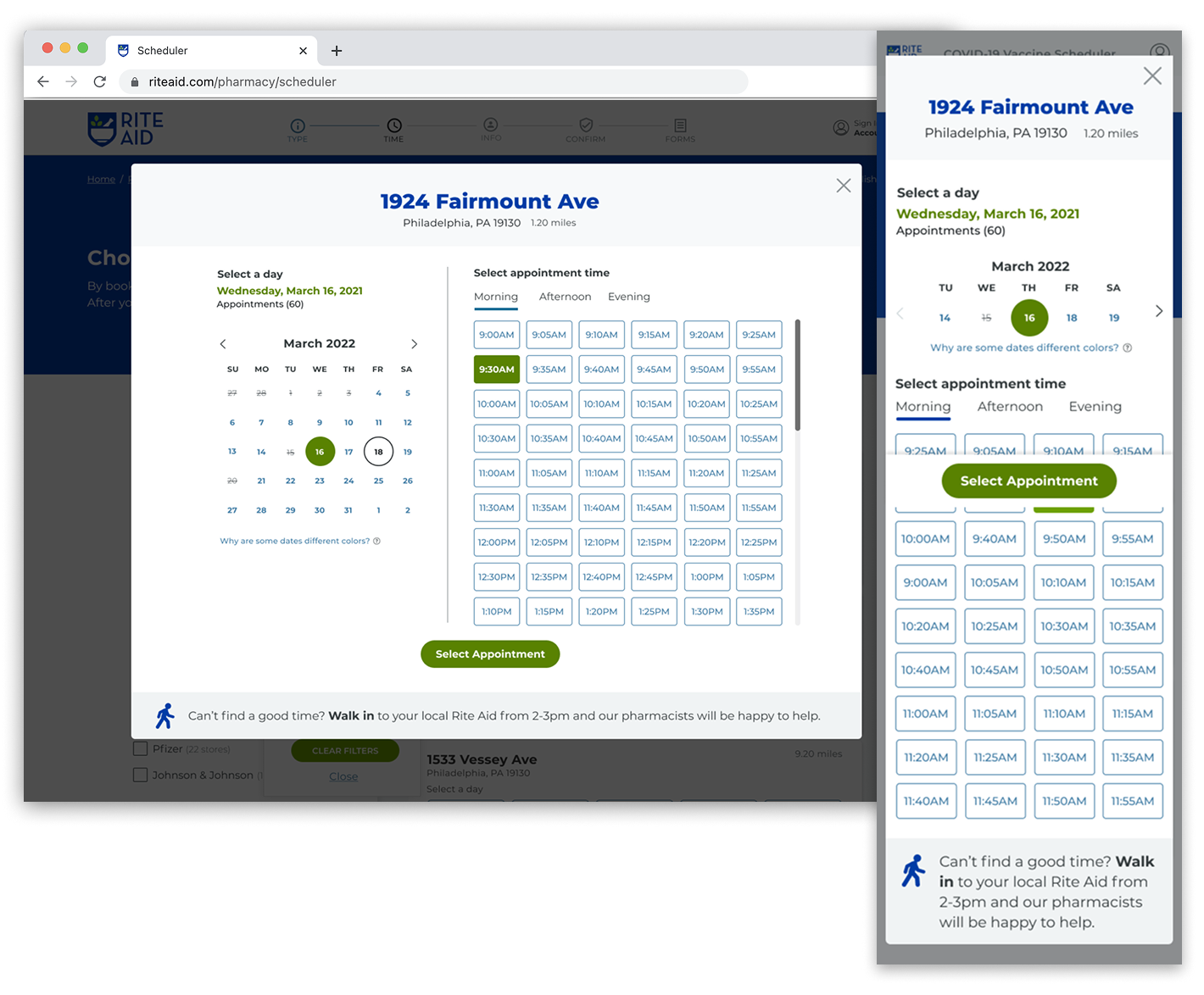
We added appointment hold countdowns because people were holding spots and jamming appointments. We tested various hold times as we learned the average time it would take to fill out forms.
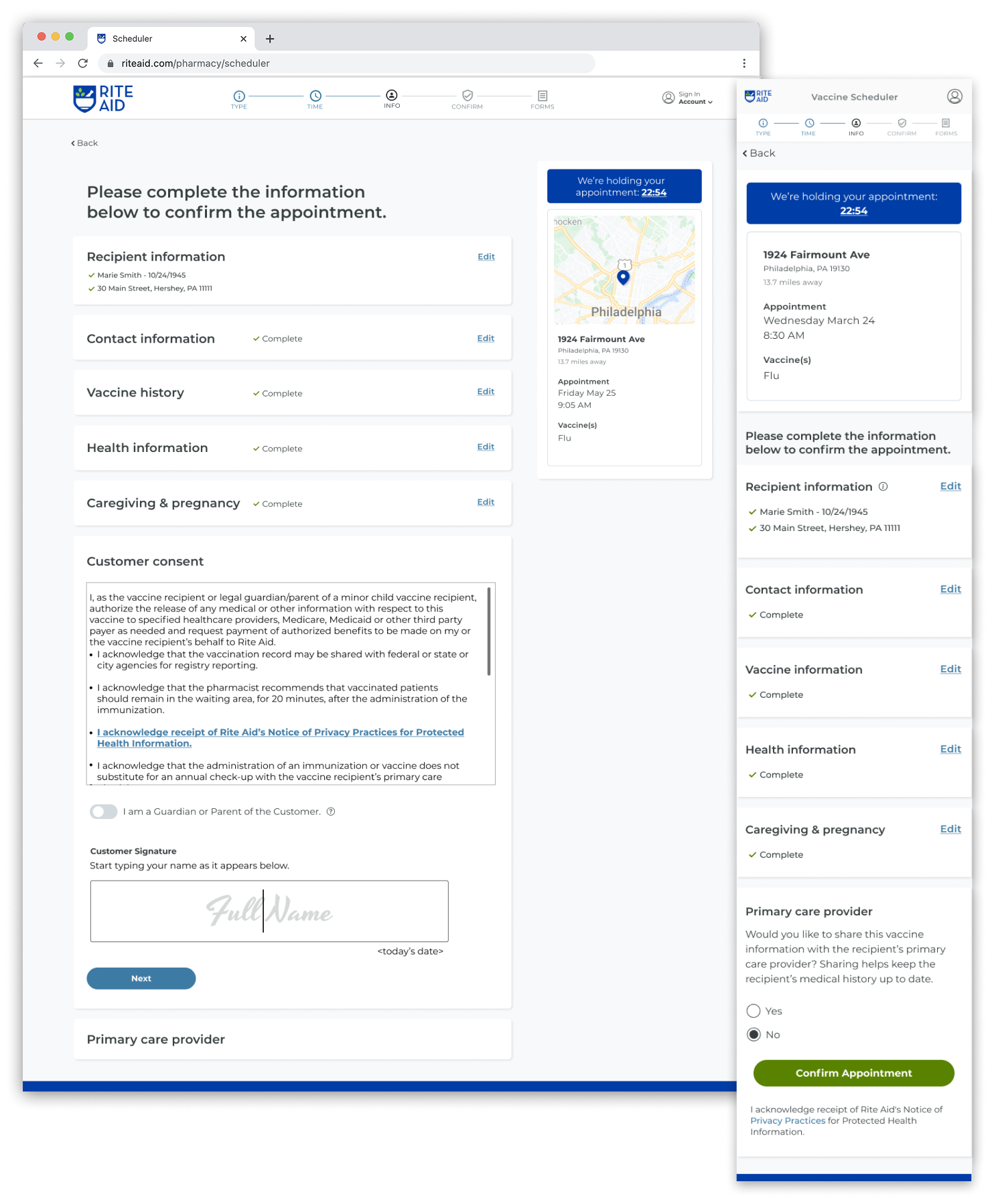
We used progressive disclosure only allowing one form section to open at a time. This way we could manage users’ anxieties and not overwhelm them with information.
Accessibility
Vaccine Availability for All
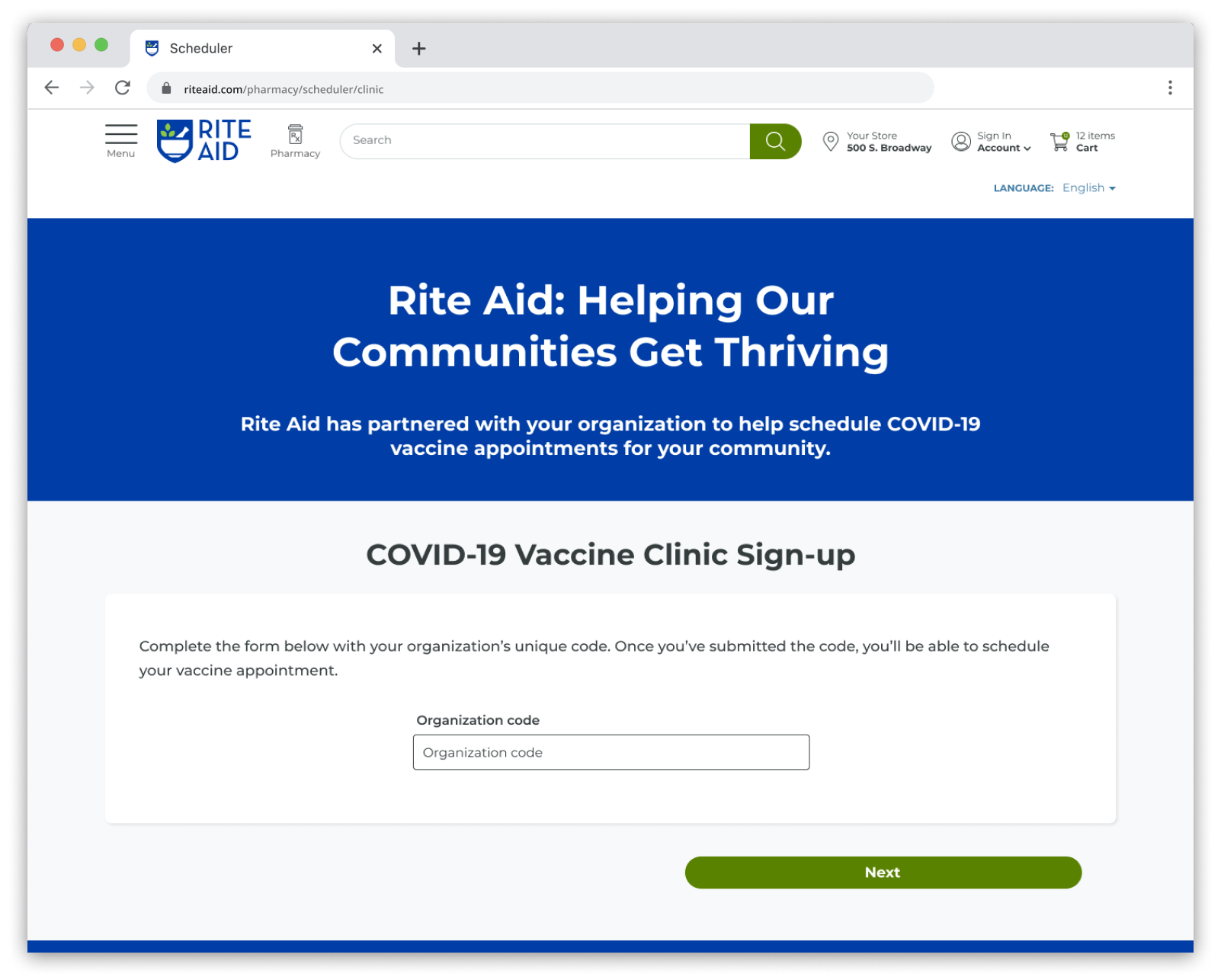
Rite Aid partnered with organizations and community leaders to make the COVID-19 vaccine accessible for anyone that wanted one. We supported the initiative with in-person digital sign up experiences using quick and approachable forms to keep lines moving.
There was a lot of fear surrounding the vaccine and the speed in which it seemed to come to market. So we provided educational materials to offer support before and after the vaccination. We also prioritized Spanish translations to this page and in-person to make sure anyone who wanted to participate could without any barriers.
ADA Components
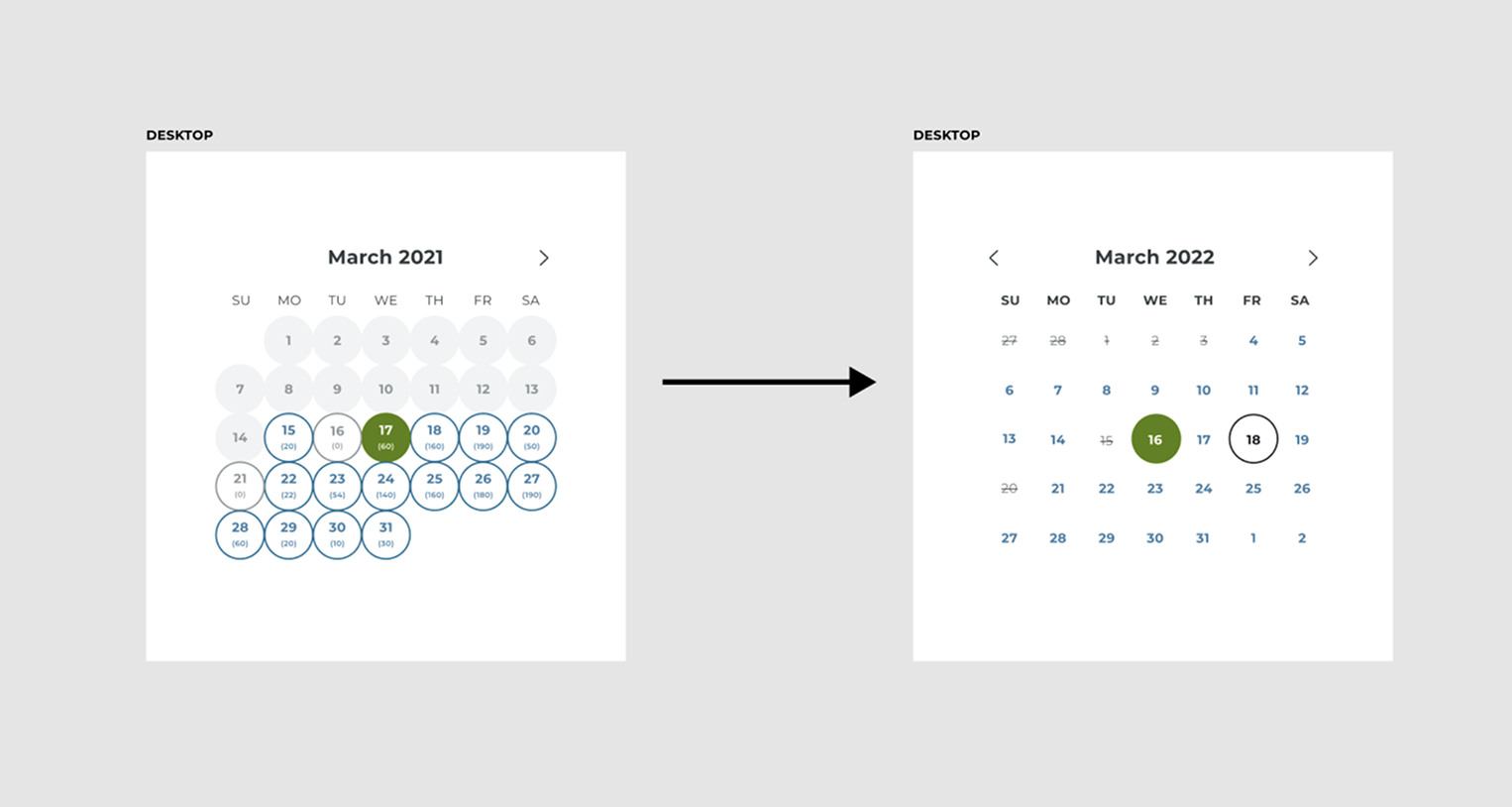
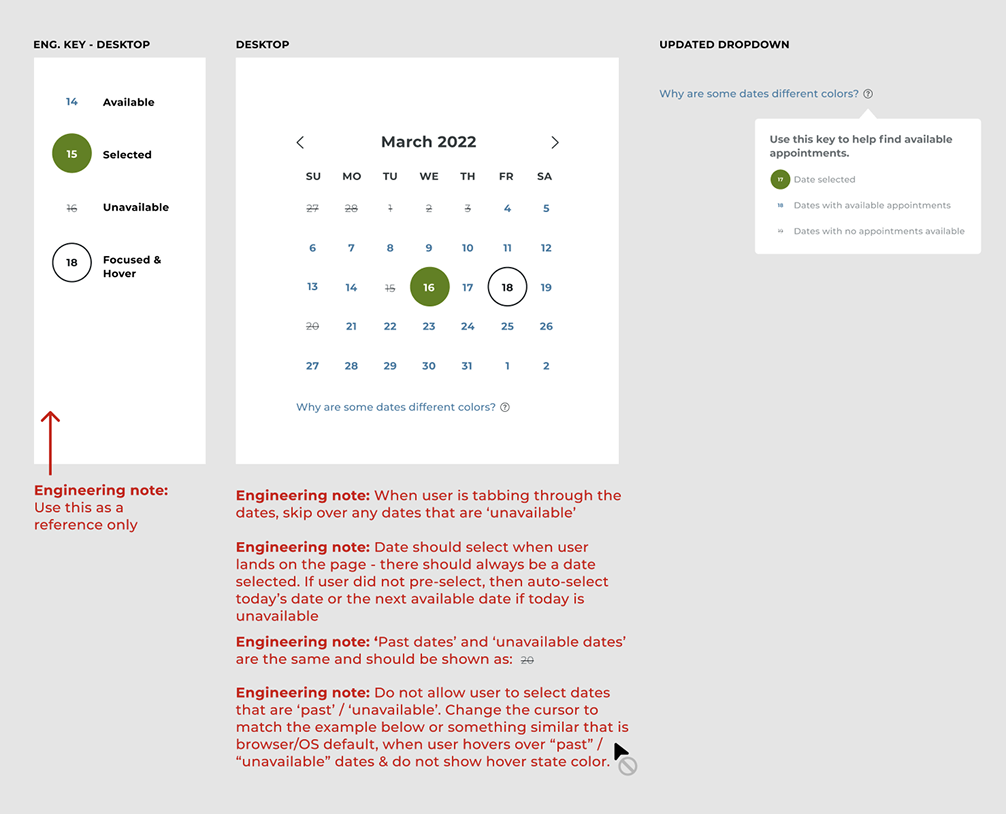
Collaborating with the engineering team, together we took a lot of care in designing and developing our components, like the calendar, to make sure they were accessible and easy to use. We used high contrast in our colors, shapes and fill to point out indicators clearly, tooltips with a key for additional assistance, easy keyboard navigation and descriptive screen readers.
Outcomes and Future Considerations
After the initial launch in late January of 2020, 25 million customers visited the scheduling tool. 240k COVID-19 vaccine appointments were booked every week through the scheduler tool, with a lift of an additional 40k bookings a week after the launch of booster scheduling.
As part of the end-to-end product, we also developed ways for users to schedule appointments from the full list of vaccines that Rite Aid offers, including flu. Making COVID-19 and flu vaccines accessible to all was a large focus of our development process. We designed additional experiences to offer clinic sign ups for small and underserved communities, call center and walk-in experiences for users without digital access and pharmacy facing tools to support our users throughout their experience.
This was a constantly evolving climate and there was still a lot of things for us to learn from our users as they formed new behaviors. We continued to iterate solutions to support COVID-19 vaccines for minors, boosters, and group booking to make scheduling easier for families or on behalf of others.